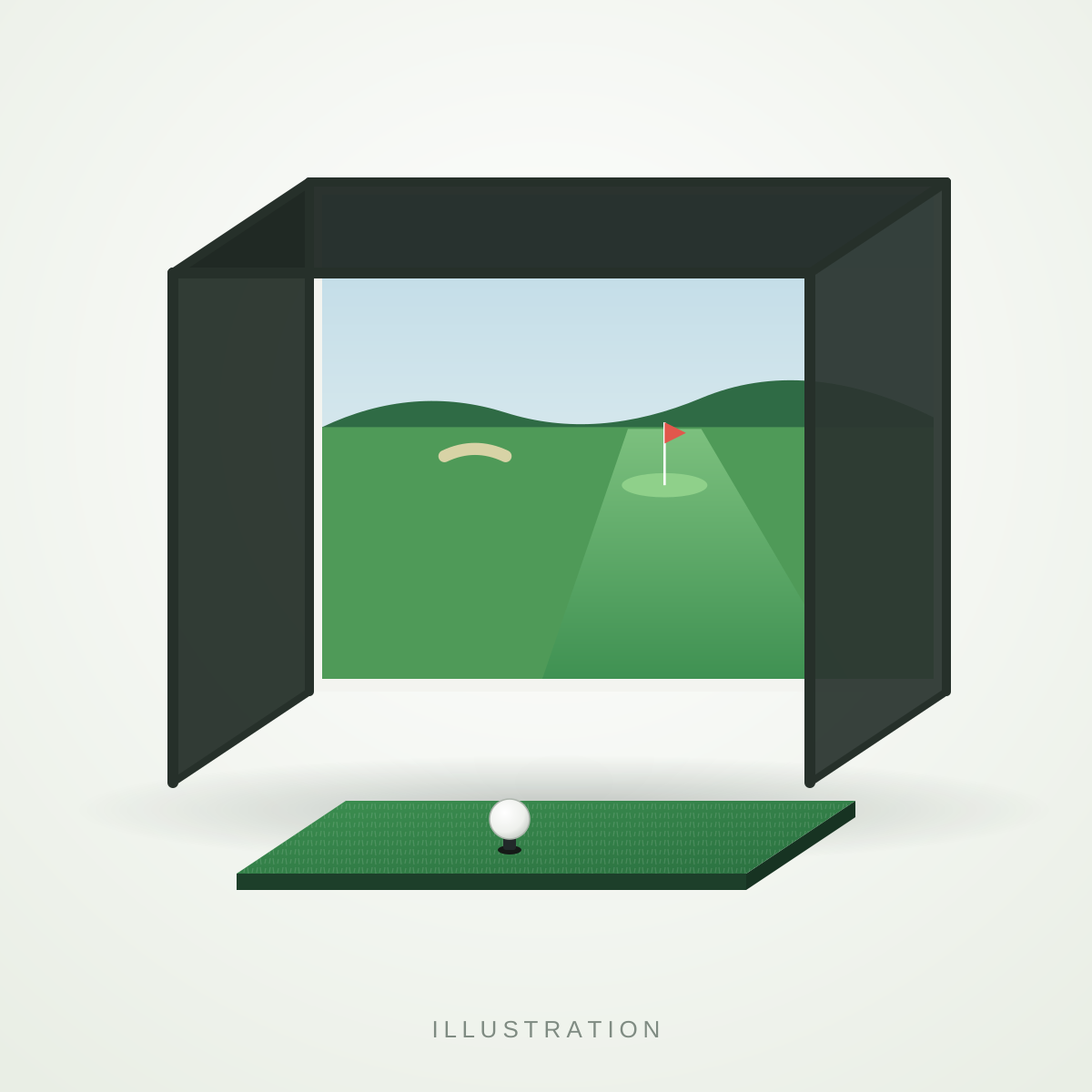
Golf simulator enclosure kit, 3 m wide, with impact screen
approx. 3 m wide impact screen side and top panels
Available soon
2 products
An enclosure is the part of a home golf simulator that makes it safe to hit full shots indoors. The frame holds an impact screen at the back, with side and top panels to catch anything that goes astray. Add a hitting mat, a launch monitor and a projector and you have a full simulator bay.
Compare all models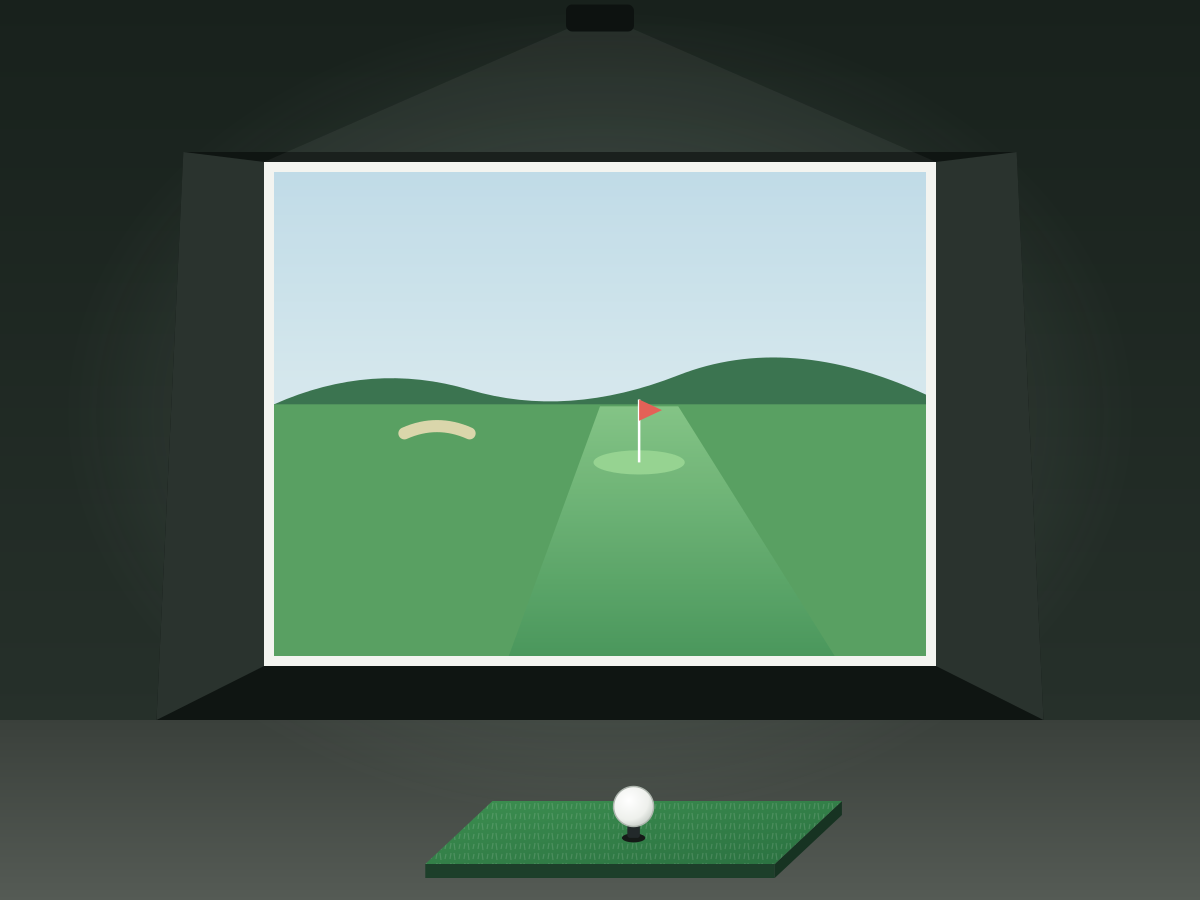
approx. 3 m wide impact screen side and top panels
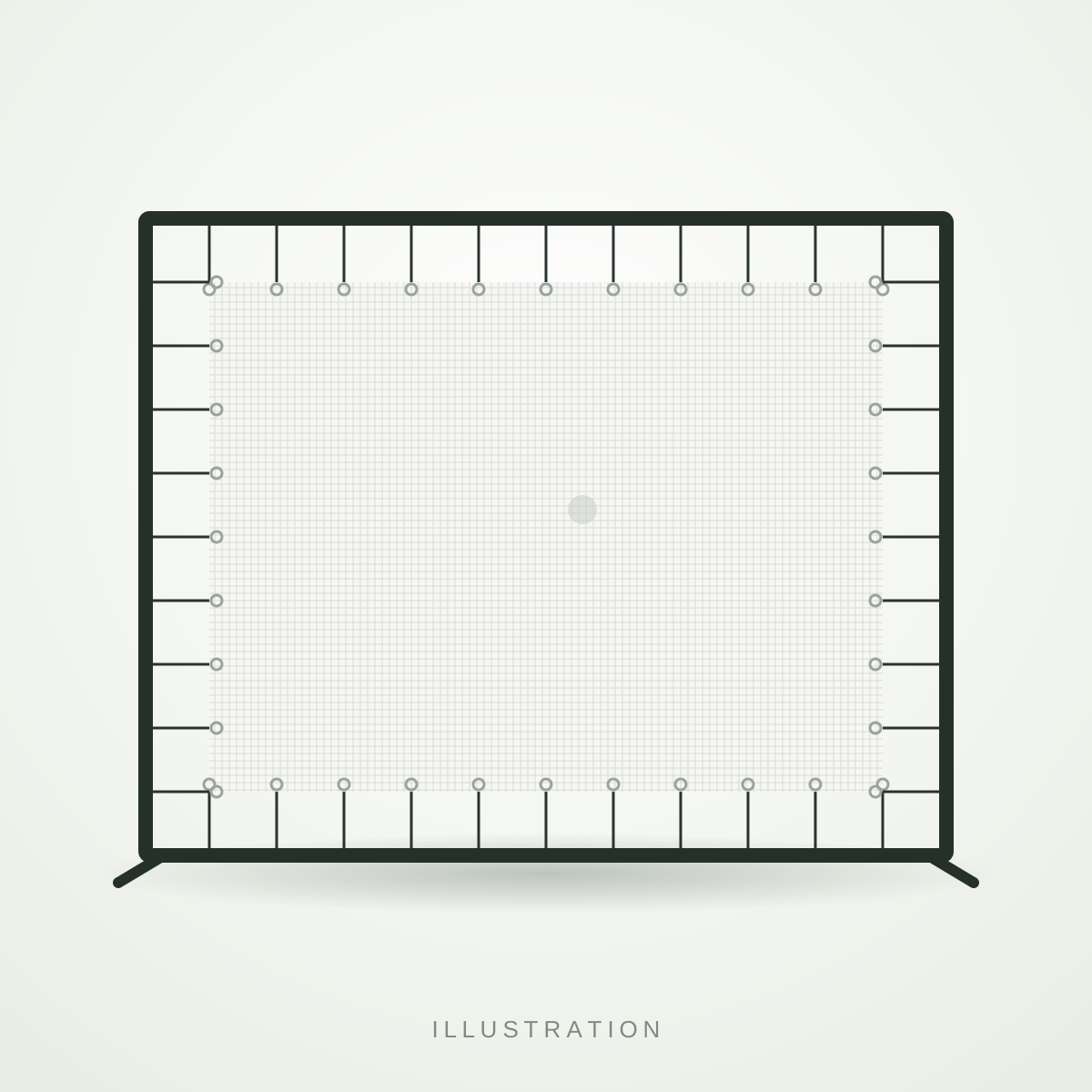
approx. 3 × 2.4 m eyelets all round for projection
A home golf simulator has five parts: a launch monitor that measures each shot, software that turns the numbers into ball flight on a virtual course or range, a projector or screen to show it, an impact screen to hit into, and an enclosure with side panels that keeps the ball inside the bay. A hitting mat completes the set-up. You can buy the parts one by one, so an enclosure is a sensible first step even if the launch monitor comes later.
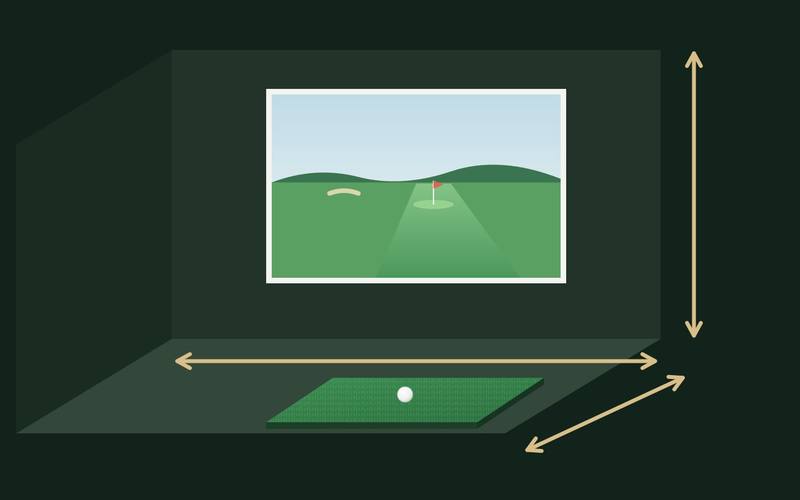
Ceiling height decides whether you can swing a driver, width decides how safe the bay feels, and depth depends on the launch monitor. Measure before you buy anything: the guide how much space you need for a home golf simulator explains what to measure and how to test your swing in the room.
A garage is the most common place for a home simulator in the UK, but low ceilings, garage door mechanisms and cold floors all need a plan. Our garage golf simulator guide walks through the build step by step, from measuring to projector placement.
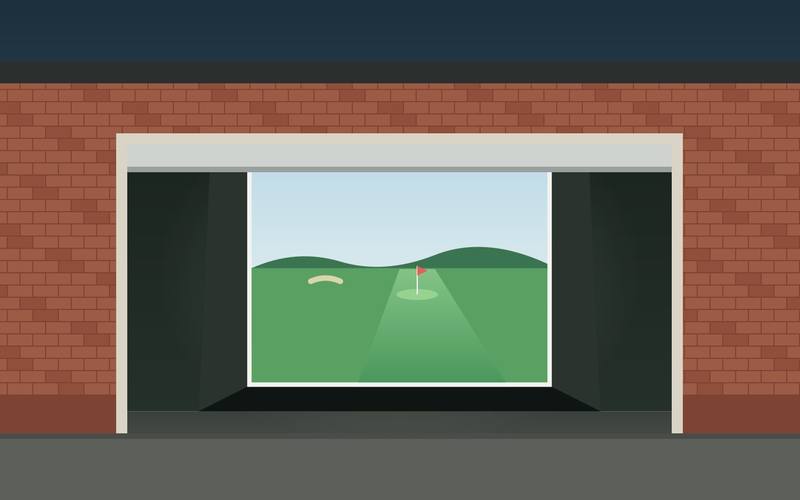
How-to
How to build a golf simulator in a garage, step by step: measuring, floor, power, enclosure and screen, projector placement, mat, launch monitor and comfort.
Space guide
How much space a home golf simulator needs: ceiling height, room width and depth for radar and camera launch monitors, and how to test your own room.
Retailers and launch monitor makers commonly suggest around 2.8 to 3 m (9 to 10 ft). The real answer depends on your height, the club and your swing, so test it: make slow practice swings with a driver in the room before you buy anything.
Not to start with. You can hit into the screen and read the numbers from the launch monitor app on a phone or tablet. A projector, ideally a short-throw model, adds the picture of the hole on the screen.
A net stops the ball. An impact screen stops the ball too, but it has a smooth, light surface you can project an image onto. Most simulator enclosures use an impact screen at the back and netting or fabric at the sides and top.